
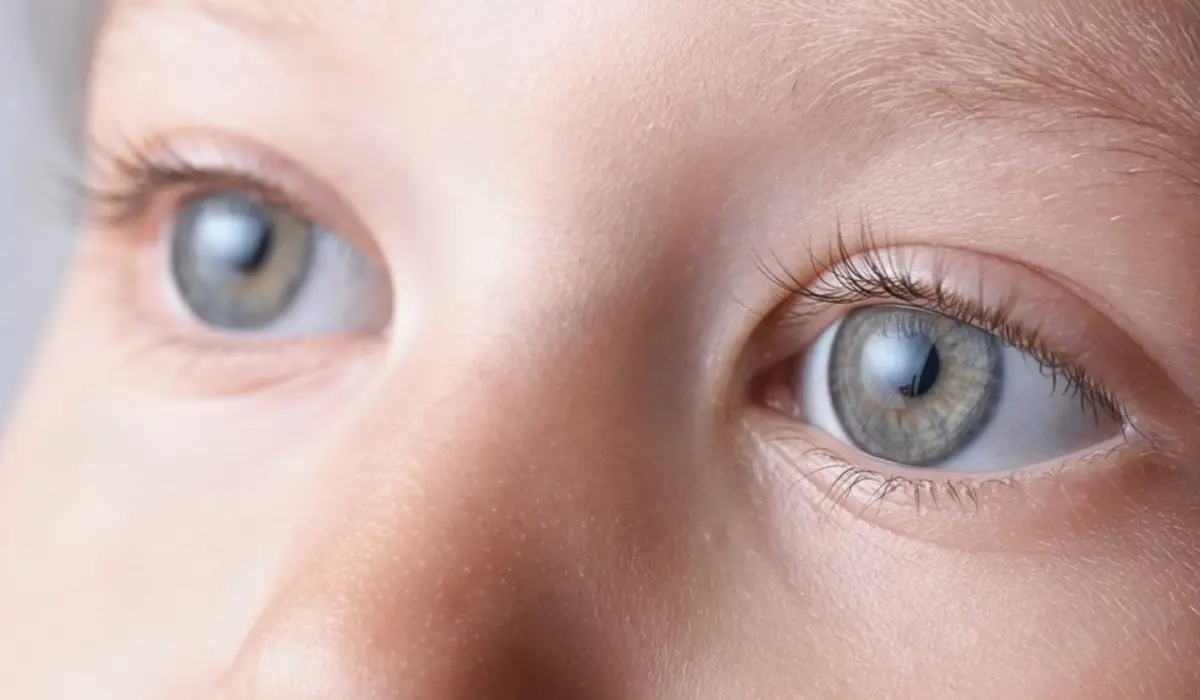
The alcohol abuse of adults can harm their babies in multiple ways. Fetal Alcohol Syndrome (FAS) Eyes is one of them, which is a severe type among the Fetal Alcohol Spectrum Disorders. This irreversible congenital condition is a result of the developing fetus being exposed to alcohol during pregnancy.
Fetal Alcohol Syndrome (FAS), which is a result of maternal alcohol consumption, affects the structural as well as internal development of a fetus. Alcohol can interfere with the normal development of the brain and the central nervous system, frequently affecting the external facial structures and the internal neurological pathways of vision.
Including the craniofacial features, there are several malformations, postnatal growth retardation, and central nervous system anomalies that can happen to the affected children, leading them to suffer through lifelong symptoms. In this article, let us take a deeper look into the symptoms and features of Fetal Alcohol Syndrome (FAS) Eyes.
Structural and Internal Eye Anomalies
When consumed during pregnancy, alcohol is known to act as a CNS teratogen, especially during crucial phases of embryogenesis. Around 90% of the children born with Fetal Alcohol Syndrome display structural and internal abnormalities.
There are two forms of eye anomalies that are linked to FAS. They include:
External and Periocular (Structural) Anomalies
The structural anomalies are the most visible features that often become the key diagnostic markers for FAS. They include:
Short Palpebral Fissures: This is a classic symptom of FAS. This diagnostic marker is characterised by a shortened distance between the inner and outer corners of the eyes.
Microphthalmia: This involves abnormal underdevelopment of the eyes, resulting in unusually small eyeballs.
Structural Anterior Malformations: These involve many severe conditions, such as Peters anomaly (with corneal opacity and tissue adhesion), Axenfeld anomaly, microcornea, and cataracts.
Blepharoptosis: This involves the drooping of the upper eyelid.
Epicanthal Folds: These are the vertical folds that cover the inner corners of the eyes.
Telecanthus & Ocular Hypertelorism: Increased spacing or distance between the inner corners of the eyes (telecanthus) or between the eyes themselves (ocular hypertelorism).
Internal (Intraocular) and Neurological Anomalies
The internal anomalies can affect every part of the eye. This can cause severe damage to the child’s vision.
Optic Nerve Hypoplasia (ONH): This is one of the most common internal defects (present in ~48% of the FAS cases), where the optic nerves are underdeveloped. This can cause permanent vision loss and visual field defects.
Retinal Vessel Tortuosity: This is when the arteries and veins in the back of the eyes appear abnormally twisted or winding.
Anterior Segment Dysgenesis: These are the internal anomalies that cause the defects in they fronty of the eyes, including Peter’s anomaly (corneal clouding and adhesion), microcornea, and the high risk of childhood glaucoma.
Coloboma: In this condition, tissue will be missing from the colored part of the eye (iris), retina, optic nerve, or from the middle layer of the eyeball (uvea), resulting in a cleft-like gap. This is caused by the failure of the embryonic fissure to close completely. This can impact the vision, sensitivity, and appearance of the eyes.
Cataracts and Refractive Errors: This involves clouding of the eye’s natural lens. Apart from this, there can be other issues, including severe myopia (nearsightedness), hyperopia (farsightedness), astigmatism, and strabismus (crossed or wandering eyes).
Functional Symptoms
The functional symptoms associated with FAS are due to the impact of alcohol on the development of the central nervous system (CNS). Alcohol can cause dysfunction or underdevelopment in the CNS, leading to lifelong physical, cognitive, and behavioural challenges for the child.
These challenges often appear along with the fetal alcohol symptoms (FAS) eyes. They include:
Cognitive and Learning Disabilities: Intellectual disabilities that are often followed by problems in memory, reasoning, problem-solving, and difficulty processing the consequences of actions.
Behavioural and Emotional Issues: High rate of ADHD, along with symptoms of high irritability, extreme distractibility, impulsivity, poor social perception, and severe mood swings.
Motor and Coordination: Poor balance, difficulty in fine-motor coordination, and hand-eye coordination.
Sensory Processing: High sensitivity to light, sound, or touch. Extreme difficulty in regulating sleep and feeding is also observed, especially in infants.
Language and Speech Delays: Symptoms include delayed speech acquisition, struggles with abstract language, and difficulty maintaining a reciprocal conversation.
Conclusion
Alcohol consumption during any stage of pregnancy is highly dangerous for the child. Even a small amount of alcohol can stay in the system of the fetus and inflict damage to its normal growth and development.
Fetal Alcohol Syndrome (FAS) Eyes is a severe condition that affects children for their whole lives. Individuals who grow up with these disorders tend to have serious vision impairments, issues with appearance, etc Many of them suffer from mental health issues as well due to the vulnerabilities they face.
FAQ
These are a range of conditions that affect fetuses during their early development stage due to maternal alcohol consumption during pregnancy, resulting in lifelong structural and internal anomalies.
There is a spectrum of ocular and periocular abnormalities linked to FAS that can affect children whose mothers consumed alcohol during pregnancy. They include short palpebral fissures, telecanthus, epicanthus, blepharoptosis, etc.
The only way to prevent FAS from happening to your child is to avoid alcohol during pregnancy. Alcohol in any quantity at any stage of pregnancy is highly dangerous to the fetus’s normal development and growth.
Although FAS is a lifelong condition with no cure at all, early medical intervention with behavioural therapies, educational support, and structured parental training can help greatly in the management of potential outcomes.
Reference Links:
https://www.sciencedirect.com/science/article/abs/pii/0039625787900282
https://pmc.ncbi.nlm.nih.gov/articles/PMC2773598
https://medlineplus.gov/fetalalcoholspectrumdisorders.html
https://my.clevelandclinic.org/health/diseases/15677-fetal-alcohol-syndrome

