
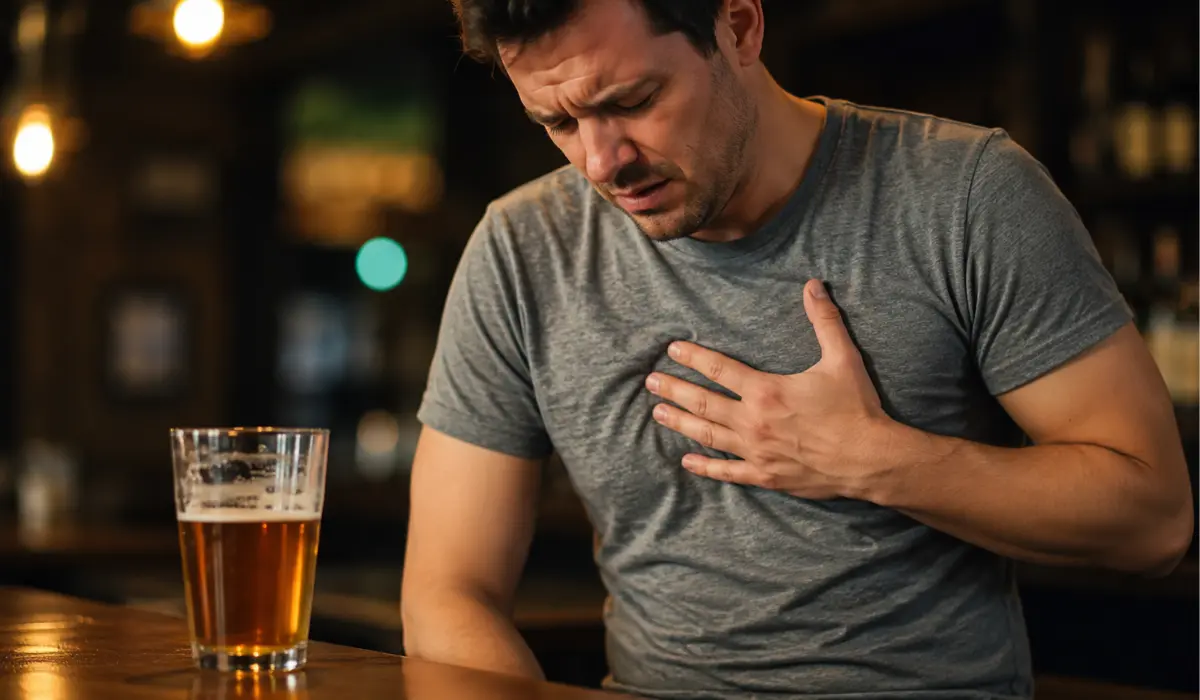
Alcohol affects several systems that can produce discomfort in or around the chest. It may irritate the esophagus and stomach, increase acid reflux, alter the heartbeat, raise blood pressure, or place additional strain on the heart.
The exact cause depends on factors such as how much alcohol was consumed, how quickly it was consumed, existing medical conditions, medication use, hydration, and whether the person regularly drinks heavily.
The National Institute on Alcohol Abuse and Alcoholism notes that alcohol misuse can contribute to reflux, high blood pressure, increased heart rate, irregular rhythms, cardiomyopathy, and heart attack risk.
Acid Reflux And Heartburn
Acid reflux is one of the most common explanations for burning chest pain after drinking alcohol. It occurs when stomach contents move backward into the esophagus, irritating its sensitive lining.
This discomfort is usually felt behind the breastbone. It may become worse after eating, bending over, or lying down. Other symptoms can include a sour taste, burping, nausea, throat irritation, or the sensation of food returning to the mouth.
Alcohol is associated with an increased risk of gastroesophageal reflux disease. GERD may cause burning chest discomfort, upper abdominal pain, swallowing problems, or a lump-like feeling in the throat.
Gastritis And Esophageal Irritation
Alcohol can irritate and inflame the stomach lining, contributing to gastritis. The connection between alcohol and gastritis is especially relevant for people who drink heavily or frequently. The resulting pain often develops in the upper abdomen but may be interpreted as lower chest discomfort.
Alcohol may also irritate the esophagus, particularly when combined with vomiting, frequent acid reflux, spicy food, smoking, or certain medications. Esophageal inflammation can cause burning pain, painful swallowing, or discomfort that feels similar to heart-related chest pain.
Severe or persistent symptoms, difficulty swallowing, vomiting blood, black stools, or unexplained weight loss require medical evaluation.
Irregular Heartbeat After Drinking
Alcohol can interfere with the heart’s electrical signals. This may produce a rapid, pounding, fluttering, or irregular heartbeat accompanied by chest pressure, shortness of breath, weakness, or dizziness.
A rhythm disturbance following heavy or binge drinking is sometimes called holiday heart syndrome. It may occur even in people without a previously diagnosed heart condition. Both short-term heavy drinking and long-term alcohol use have been associated with arrhythmias, including atrial fibrillation.
Anyone experiencing chest pain with a racing, fluttering, unusually slow, or irregular heartbeat should obtain urgent medical guidance.
Increased Blood Pressure And Heart Strain
Alcohol can temporarily affect blood pressure and heart rate. Repeated heavy drinking can contribute to sustained high blood pressure, forcing the heart to work harder.
Long-term heavy alcohol use may also weaken and enlarge the heart muscle. This condition, known as alcohol-associated cardiomyopathy, reduces the heart’s ability to pump blood efficiently. Possible symptoms include fatigue, shortness of breath, swelling in the legs, irregular heartbeat, and exercise intolerance.
Chest pressure during physical activity may also indicate angina, which occurs when the heart muscle does not receive enough oxygen-rich blood.
Pancreatitis And Referred Pain
Heavy alcohol consumption can contribute to pancreatitis, a painful inflammation of the pancreas. Pancreatitis usually causes severe upper abdominal pain, but the discomfort may spread toward the back, shoulder blade, or lower chest.
Other symptoms can include nausea, vomiting, fever, abdominal tenderness, bloating, and a rapid heartbeat. Acute pancreatitis can become dangerous and generally requires urgent medical assessment.
Chest Pain During Alcohol Withdrawal
A person who drinks heavily or regularly should not assume that suddenly stopping alcohol is always safe without medical support. Alcohol withdrawal can cause anxiety, sweating, tremors, nausea, palpitations, increased heart rate, irregular heartbeat, and chest pain.
Severe withdrawal may lead to seizures, hallucinations, confusion, fever, or delirium tremens. Delirium tremens is a medical emergency and requires immediate hospital treatment.
People concerned about alcohol dependence should speak with a healthcare professional before attempting to stop, particularly if they have experienced withdrawal symptoms before.
When Is Chest Pain An Emergency?
Call 911 or the appropriate local emergency number when chest pain:
- Feels crushing, squeezing, heavy, tight, or intensely pressurized
- Spreads to the arm, shoulder, jaw, neck, stomach, or back
- Occurs with shortness of breath, sweating, nausea, or vomiting
- Is accompanied by fainting, severe dizziness, confusion, or weakness
- Occurs with a rapid, fluttering, or irregular heartbeat
- Is new, severe, persistent, or repeatedly returns
Heart attack discomfort can sometimes feel like indigestion or heartburn. It is safer to seek emergency care than to assume that chest pain is only a digestive reaction to alcohol.
Do not drive yourself to the hospital when a heart attack or other serious condition is suspected.
What To Do About Chest Pain After Drinking?
Stop drinking alcohol when chest discomfort develops. Sit upright, rest, and avoid strenuous activity. Do not continue drinking to see whether the sensation disappears.
For mild burning that has previously been diagnosed as reflux, avoiding large meals and remaining upright may help. However, antacids should not be used to rule out a heart problem because cardiac chest pain can feel similar to indigestion.
Arrange a medical appointment when symptoms repeatedly occur after alcohol, even when they disappear. A clinician may evaluate the heart rhythm, blood pressure, gastrointestinal system, pancreas, medications, and drinking pattern to identify the cause.
Keeping a record of the type and amount of alcohol consumed, symptom timing, food intake, heartbeat changes, and accompanying symptoms can help with the assessment.
Can Alcohol-Related Chest Pain Be Prevented?
Reducing or avoiding alcohol may prevent symptoms when drinking is the trigger. People with atrial fibrillation, high blood pressure, cardiomyopathy, GERD, gastritis, pancreatitis, or coronary artery disease may be advised to avoid alcohol entirely.
Additional precautions include avoiding binge drinking, eating balanced meals, staying hydrated, not mixing alcohol with medications without professional guidance, and attending routine health checks.
Chest pain should still be evaluated rather than managed only through lifestyle changes. The location or intensity of pain alone cannot reliably distinguish heartburn from a heart condition.
Frequently Asked Questions
Why does my chest hurt the day after drinking alcohol?
Chest discomfort the next day may result from acid reflux, stomach irritation, dehydration, increased blood pressure, anxiety, or alcohol-related changes in heart rhythm.
2. Can one night of drinking cause heart-related chest pain?
Yes. A heavy drinking episode may trigger a rapid or irregular heartbeat, sometimes called holiday heart syndrome, even without previously diagnosed heart disease.
3. How can I tell whether the pain is heartburn or heart pain?
Heartburn often causes burning after eating or lying down, but heart attacks can feel similar. New, severe, spreading, or unexplained pain needs urgent evaluation.
4. Can alcohol withdrawal cause chest pain and palpitations?
Yes. Withdrawal may cause palpitations, rapid heart rate, sweating, anxiety, and chest pain. Severe withdrawal symptoms require immediate medical treatment.
5. Should I stop drinking if alcohol repeatedly causes chest pain?
Stop drinking and arrange a medical evaluation. People who drink heavily or experience withdrawal symptoms should seek professional support before suddenly stopping alcohol.
References
1. National Institute on Alcohol Abuse and Alcoholism (NIAAA)
Alcohol’s Effects on the Body
https://www.niaaa.nih.gov/alcohols-effects-health/alcohols-effects-body
2. Cleveland Clinic
Holiday Heart Syndrome: Symptoms and Treatment
https://my.clevelandclinic.org/health/diseases/holiday-heart-syndrome
3. Mayo Clinic
Chest Pain: Symptoms and Causes
https://www.mayoclinic.org/diseases-conditions/chest-pain/symptoms-causes/syc-20370838

