
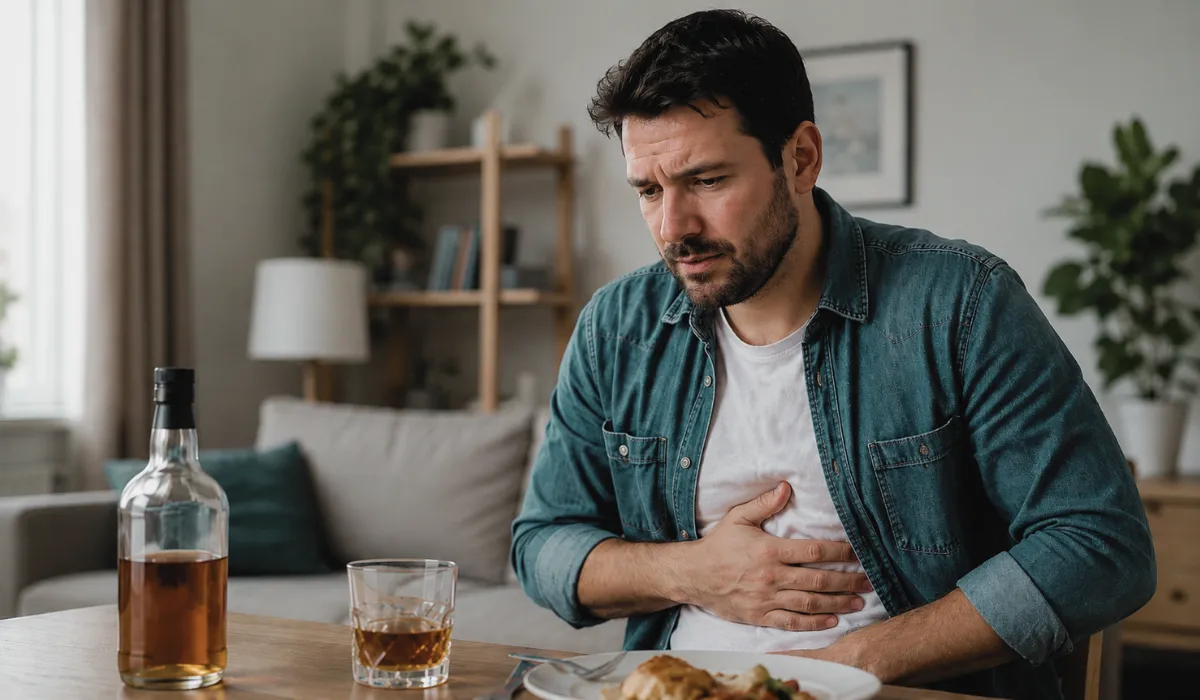
Alcohol can cause gastritis in some people, especially when drinking is heavy, frequent, or done on an empty stomach. Gastritis means the stomach lining becomes irritated, inflamed, or weakened. When this happens, the stomach may become more sensitive to acid, food, and other triggers.
Not everyone who drinks alcohol will develop gastritis. However, alcohol is a known stomach irritant. For some people, even moderate drinking may cause burning, nausea, bloating, or upper stomach discomfort. For others, symptoms may appear after binge drinking or long-term alcohol use.
How Alcohol Affects The Stomach Lining?
The stomach has a protective lining that helps defend it from digestive acid. Alcohol can disturb this protective barrier. When the lining becomes weaker, stomach acid can irritate the tissue more easily.
This irritation may lead to inflammation, discomfort, and indigestion-like symptoms. Strong alcoholic drinks, frequent drinking, and drinking without food may increase the chance of stomach irritation.
Alcohol may also increase acid-related discomfort in some people. This can make the stomach feel sour, heavy, or painful after drinking. People who already have acid reflux, ulcers, or digestive sensitivity may notice symptoms more quickly.
What Is Alcoholic Gastritis?
Alcoholic gastritis is a common term used when alcohol contributes to stomach lining irritation. It may happen suddenly after heavy drinking, or it may develop slowly from repeated alcohol use over time.
Acute gastritis can appear quickly. A person may feel stomach burning, nausea, vomiting, bloating, or loss of appetite after drinking. Symptoms may improve when alcohol is stopped and the stomach is allowed to heal.
Chronic gastritis may last longer. It can happen when the stomach lining stays irritated for weeks, months, or longer. Chronic irritation should not be ignored because it may increase the risk of ulcers, bleeding, or ongoing digestive problems.
Common Symptoms Of Alcohol-Related Gastritis
The symptoms of gastritis can vary from mild to severe. Some people may have only occasional discomfort, while others may feel sick every time they drink alcohol.
Common symptoms may include upper abdominal pain, burning in the stomach, nausea, vomiting, bloating, burping, early fullness, loss of appetite, and indigestion. Some people may also feel worse after spicy foods, coffee, fried foods, or acidic drinks.
More serious symptoms need medical attention. These include vomiting blood, black stools, severe stomach pain, dizziness, unexplained weight loss, or repeated vomiting. These signs may suggest bleeding or another serious digestive condition.
Can One Night Of Drinking Cause Gastritis?
Yes, one episode of heavy drinking can irritate the stomach lining and cause acute gastritis symptoms. This is more likely after binge drinking, mixing alcohol with pain relievers, or drinking on an empty stomach.
After one night of drinking, symptoms may include stomach burning, nausea, sour burps, vomiting, and poor appetite. Some people may describe it as a hangover stomach, but it can still involve stomach lining irritation.
Mild symptoms may settle within a few days if alcohol is avoided and the stomach is treated gently. However, severe pain, blood in vomit, or black stool should be checked by a healthcare provider immediately.
Alcohol, Acid, And Stomach Pain
Alcohol can make the stomach feel more acidic or irritated. It may also worsen acid reflux in some people. This can cause burning in the upper abdomen, chest discomfort, sour taste, or nausea.
Different alcoholic drinks may affect people differently. Beer and sparkling alcoholic drinks may cause bloating because of carbonation. Wine may feel acidic for some people. Spirits may be harsh on the stomach lining, especially when taken straight.
The amount of alcohol also matters. Larger amounts increase the chance of irritation. Drinking slowly, eating beforehand, and avoiding frequent drinking may reduce risk, but people with gastritis may need to avoid alcohol fully while healing.
Who Is More At Risk?
Some people are more likely to develop gastritis after drinking alcohol. Risk may be higher in people who drink heavily, binge drink, or drink daily.
People who use NSAID pain relievers such as ibuprofen, aspirin, or naproxen may also have a higher risk of stomach irritation. Combining alcohol with these medicines can be especially harsh on the stomach.
Other risk factors may include H. pylori infection, older age, smoking, high stress, previous ulcers, acid reflux, liver disease, and a history of digestive problems. In these cases, alcohol may worsen an already sensitive stomach.
How Long Does Alcohol Gastritis Last?
The healing time depends on the cause, severity, and whether alcohol use continues. Mild irritation after one drinking episode may improve within a few days. Chronic gastritis may take longer and may need medical treatment.
If symptoms keep returning after alcohol, the stomach lining may not be getting enough time to recover. Continuing to drink can delay healing and make symptoms worse.
A doctor may recommend acid-reducing medicines, testing for H. pylori, dietary changes, or other treatment depending on symptoms. It is important not to self-diagnose long-lasting stomach pain.
What Helps Alcohol-Related Gastritis?
The most important step is avoiding alcohol, at least until symptoms improve and a healthcare provider gives guidance. The stomach lining needs time away from irritants to heal properly.
Eating smaller, bland meals may help. Foods such as rice, bananas, toast, oatmeal, soup, and boiled vegetables may feel easier on the stomach. Spicy foods, fried foods, coffee, citrus, and carbonated drinks may worsen symptoms for some people.
Drinking water, getting rest, and avoiding smoking may also support recovery. Do not take NSAID pain relievers for stomach pain unless a doctor says it is safe. These medicines can irritate the stomach lining.
When Should You See A Doctor?
You should see a doctor if stomach pain lasts more than a few days, keeps returning after alcohol, or affects eating and daily life. Medical advice is also important if you have frequent nausea, vomiting, poor appetite, or unexplained weight loss.
Get urgent medical help if you vomit blood, notice black or tarry stools, feel faint, or have severe abdominal pain. These may be signs of bleeding or a more serious condition.
A doctor may ask about alcohol use, medicines, symptoms, and medical history. Testing may include blood tests, stool tests, breath tests for H. pylori, or an endoscopy if symptoms are serious or ongoing.
Can You Drink Again After Gastritis?
Some people may be able to drink occasionally after gastritis heals, but others may find that alcohol keeps triggering symptoms. It depends on the person and the cause of the gastritis.
If alcohol caused the problem, drinking again too soon may bring symptoms back. People with chronic gastritis, ulcers, liver disease, or repeated stomach irritation should be especially careful.
It is best to ask a healthcare provider before drinking again if symptoms were severe or long-lasting. If alcohol is difficult to reduce or stop, professional support can help.
Final Verdict
Alcohol can cause gastritis because it can irritate and weaken the stomach lining. This may lead to burning pain, nausea, bloating, vomiting, and indigestion. Heavy drinking, binge drinking, and mixing alcohol with certain pain medicines may increase the risk.
The best way to protect the stomach is to avoid alcohol when symptoms appear. Gentle foods, hydration, and medical guidance can help support healing.
Gastritis should not be ignored if symptoms are severe, repeated, or linked with bleeding signs. Getting the right diagnosis can help prevent complications and support better digestive health.
FAQ
One drink may irritate the stomach in sensitive people, but gastritis is more common after heavy, repeated, or strong alcohol intake.
Alcohol gastritis may feel like burning upper stomach pain, nausea, bloating, burping, vomiting, early fullness, or discomfort after drinking.
Mild irritation may improve in a few days, but chronic gastritis can take longer and may need medical treatment.
Strong spirits, acidic wine, beer, and carbonated drinks may bother some people, but any alcohol can irritate gastritis.
Yes, avoiding alcohol is usually recommended while the stomach lining heals. Drinking again may worsen symptoms or delay recovery.
References
NIDDK
Symptoms & Causes of Gastritis & Gastropathy
https://www.niddk.nih.gov/health-information/digestive-diseases/gastritis-gastropathy/symptoms-causes
Mayo Clinic
Gastritis – Symptoms and Causes
https://www.mayoclinic.org/diseases-conditions/gastritis/symptoms-causes/syc-20355807
Cleveland Clinic
Gastritis: What It Is, Symptoms, Causes & Treatment
https://my.clevelandclinic.org/health/diseases/10349-gastritis

