
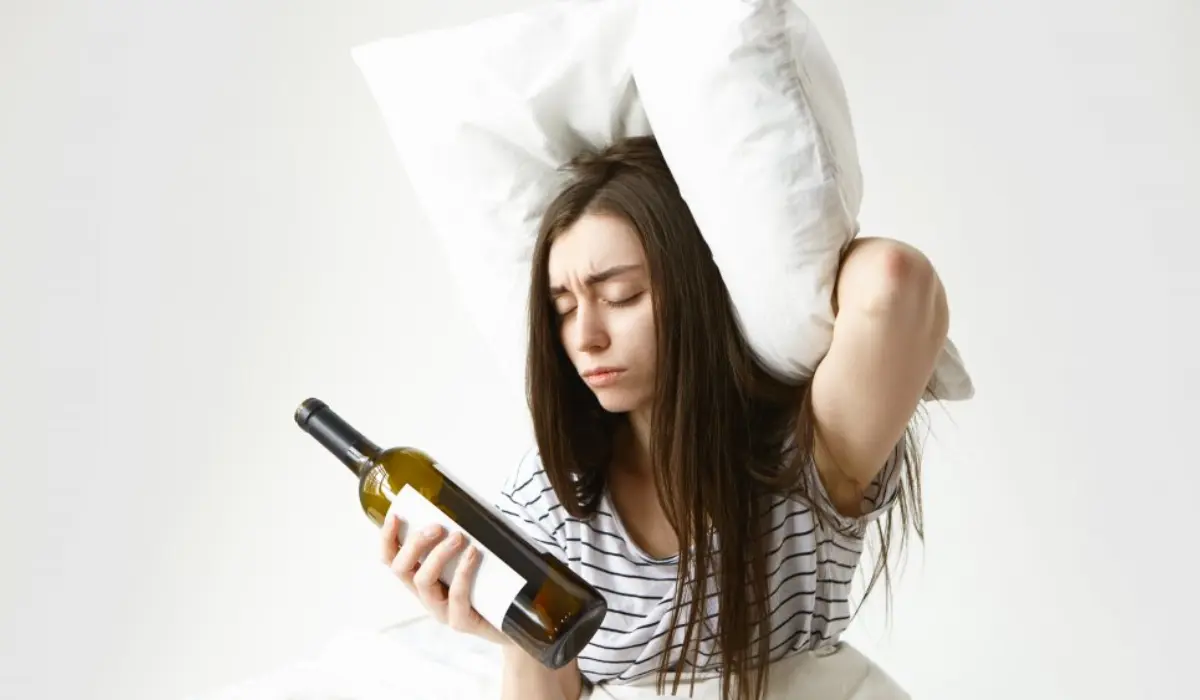
Alcohol may make you feel sleepy at first, but it can disturb sleep later in the night. Many people fall asleep faster after drinking, then wake up at 2 a.m. or 3 a.m. feeling restless, sweaty, thirsty, anxious, or unable to fall back asleep.
This happens because alcohol changes normal sleep patterns. It can reduce sleep quality, increase nighttime awakenings, affect breathing, increase urination, and worsen anxiety or withdrawal symptoms in some people. Mayo Clinic also advises limiting or avoiding alcohol because it can make sleeping harder.
How Alcohol Tricks the Body Into Feeling Sleepy?
Alcohol has a sedating effect at first. That is why some people use a drink as a “nightcap” to relax before bed. The problem is that sedation is not the same as healthy sleep.
A person may fall asleep quickly but still get poor-quality rest. As the body breaks down alcohol, sleep often becomes lighter and more broken. Alcohol might make you feel sleepy at first, but it can disrupt sleep later in the night.
Alcohol Disrupts Sleep Stages
Healthy sleep moves through different stages, including deep sleep and REM sleep. These stages help the body recover and support mood, memory, focus, and emotional balance.
Alcohol can disturb this pattern. Sleep Foundation explains that alcohol may reduce REM sleep and lead to lighter, less restorative rest with more frequent awakenings.
This is one reason someone may sleep for several hours but still wake up tired, foggy, irritable, or unrefreshed the next morning.
Night Waking After Drinking
Many people with alcohol-related insomnia do not only struggle to fall asleep. The bigger problem is staying asleep.
Alcohol may cause the first half of sleep to feel heavy, then the second half becomes restless. You may wake up hot, anxious, thirsty, or needing the bathroom. Once awake, the body may feel too alert to return to sleep.
This can create a frustrating cycle. A person drinks to fall asleep, wakes up during the night, feels tired the next day, then drinks again to relax. Over time, this pattern can make insomnia harder to break.
Alcohol Can Increase Bathroom Trips
Drinking can increase urination, which may interrupt sleep. Alcohol affects hormones that help the body hold onto fluid, so you may wake up needing to use the bathroom.
This can also contribute to dehydration. Alcohol suppresses vasopressin, which can increase urination and fluid loss.
Waking up thirsty, dry-mouthed, or with a headache can make it even harder to sleep through the night.
Drinking May Worsen Anxiety at Night
Alcohol may feel calming at first, but it can worsen anxiety as it wears off. Some people wake up with a racing heart, worry, sweating, or a restless feeling.
This can be especially difficult for people who already deal with anxiety, panic symptoms, depression, stress, or alcohol use concerns. Research has linked heavy alcohol use and alcohol use disorder with insomnia symptoms and sleep continuity problems.
Alcohol Can Affect Breathing During Sleep
Alcohol relaxes muscles, including muscles around the throat. This can worsen snoring and sleep apnea in some people.
Sleep Foundation notes that drinking before bed can worsen snoring and sleep apnea by relaxing throat muscles and narrowing the airway.
Poor breathing during sleep can lead to repeated awakenings, morning headaches, dry mouth, daytime fatigue, and poor concentration.
Withdrawal Can Make Insomnia Worse
People who drink heavily or daily may notice worse insomnia when they cut down or stop drinking. This can happen because the nervous system is adjusting to the absence of alcohol.
Alcohol withdrawal can cause insomnia, sweating, tremors, anxiety, nausea, fast heart rate, and other symptoms. Withdrawal is more likely in people who drink often and stop or reduce alcohol use.
Heavy drinkers should not stop suddenly without medical advice. Alcohol withdrawal can be dangerous and may require professional support.
Practical Tips to Sleep Better Without Alcohol
Try to avoid alcohol close to bedtime. If you drink, give your body more time to process it before sleep. Keep your bedroom cool, dark, and quiet.
Build a calming routine that does not rely on alcohol. This may include a warm shower, light stretching, reading, breathing exercises, or relaxing music. Avoid heavy meals, caffeine, nicotine, and screens close to bedtime when possible.
Stay hydrated during the day, but avoid drinking too much fluid right before bed. A consistent sleep schedule can also help train the body to feel sleepy at the right time.
When to Seek Professional Help?
Talk with a healthcare provider if insomnia lasts more than a few weeks, affects daily life, or keeps returning after alcohol use. Sleep problems should also be checked if you have loud snoring, choking during sleep, morning headaches, anxiety, depression, or daytime sleepiness.
Seek medical support if you need alcohol to sleep, cannot cut back, drink daily, or feel withdrawal symptoms when you stop. Professional help can make sleep recovery safer and more manageable.
Final Thoughts
Alcohol can make insomnia worse because it disrupts sleep stages, increases night waking, affects hydration, worsens breathing, and may trigger anxiety or withdrawal symptoms. It may help you fall asleep faster, but the sleep that follows is often lighter and less restorative.
Better sleep usually comes from consistent habits, less alcohol near bedtime, stress management, and medical support when needed. If alcohol and insomnia are becoming a pattern, it is worth addressing early.
FAQs
Alcohol may help you fall asleep at first, but it disrupts sleep stages, increases night waking, worsens dehydration, and reduces sleep quality.
Yes. As alcohol wears off, sleep can become lighter and more restless, making early-morning waking more likely for some people.
Yes. Alcohol can reduce or disrupt REM sleep, which may leave you feeling tired, foggy, emotional, or poorly rested the next day.
Alcohol may worsen snoring and sleep apnea by relaxing throat muscles, narrowing the airway, and increasing breathing interruptions during sleep.
Yes. Insomnia can happen during alcohol withdrawal, especially in heavy or daily drinkers. Medical support is important if withdrawal symptoms occur.
Use a regular bedtime, avoid alcohol near sleep, reduce screens, keep the room cool, manage stress, and ask for help if insomnia continues.
Reference
- MedlinePlus – Alcohol Withdrawal
https://medlineplus.gov/ency/article/000764.htm - NIH/PMC – Alcohol and Sleep-Related Problems
https://pmc.ncbi.nlm.nih.gov/articles/PMC6801009/

