
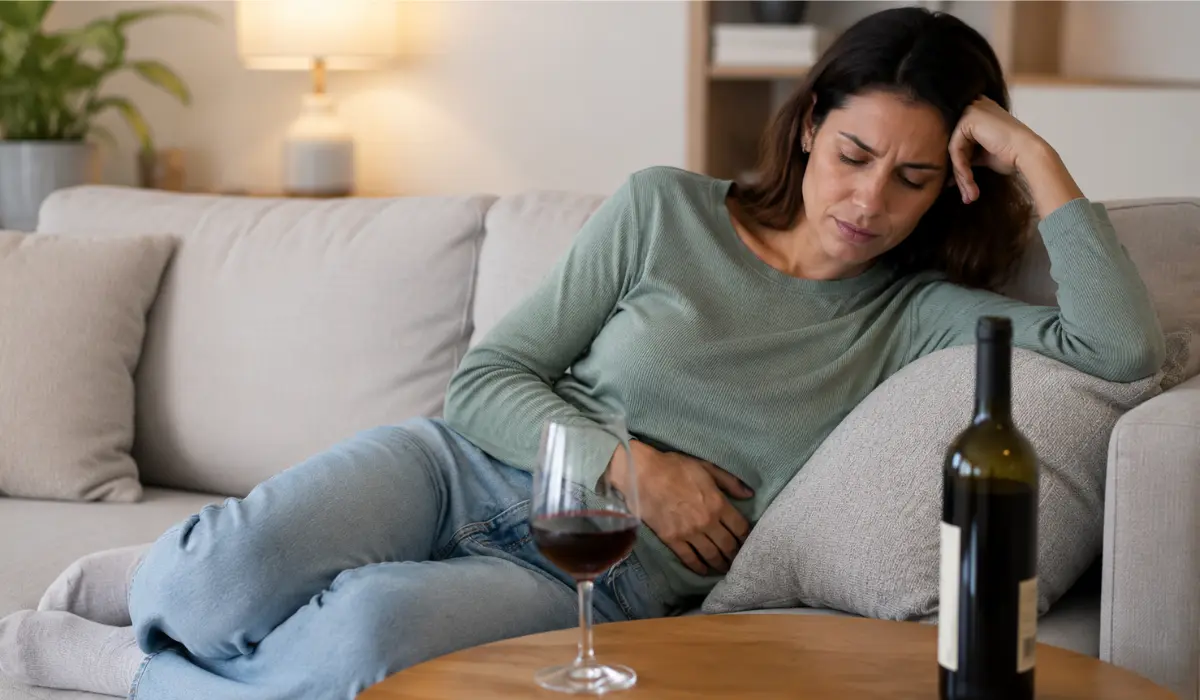
Alcohol and PMS symptoms can overlap in several ways. Drinking before your period can worsen bloating, headaches, fatigue, poor sleep, anxiety, low mood and stomach discomfort. It can also make it harder to tell whether symptoms come from premenstrual syndrome, alcohol or both.
Research has found an association between alcohol consumption and a higher likelihood of PMS, particularly with heavier drinking. However, this does not prove that alcohol directly causes PMS in every person. Individual responses vary depending on drinking patterns, hormone sensitivity, overall health and the amount consumed.
What Is Premenstrual Syndrome?
Premenstrual syndrome, commonly called PMS, describes physical and emotional symptoms that occur before menstruation. Symptoms usually develop during the second half of the menstrual cycle and improve within several days after the period begins.
Common PMS symptoms include:
- Abdominal bloating
- Breast tenderness
- Headaches
- Tiredness
- Food cravings
- Trouble sleeping
- Irritability
- Anxiety
- Sadness or mood changes
- Difficulty concentrating
The type and severity of symptoms can differ between people and between menstrual cycles.
Does Alcohol Make PMS Symptoms Worse?
Alcohol does not affect everyone in the same way, but it can intensify symptoms that commonly occur before a period.
A systematic review and meta-analysis found that alcohol consumption was moderately associated with PMS. The researchers also reported a stronger association among heavier drinkers, although the included studies could not confirm that alcohol was the direct cause.
Some people notice stronger symptoms after drinking during the days before menstruation. Others may not see a clear connection until they track their alcohol intake and symptoms across several cycles.
How Alcohol Can Affect PMS Symptoms?
Alcohol Can Worsen Bloating
Bloating and water retention are already common before a period. Alcohol can add to the discomfort by contributing to dehydration, digestive irritation and changes in food choices.
Beer, sparkling wine and carbonated mixers can increase gas and abdominal pressure. Salty snacks commonly eaten while drinking can also make water retention feel worse.
A person may therefore notice a swollen abdomen, tighter clothing or increased digestive discomfort the next day.
It Can Increase Headaches
Hormonal changes can trigger headaches or migraines around menstruation. Alcohol can also cause headaches by affecting blood vessels, sleep and hydration.
Some drinks contain substances that trigger migraines in sensitive people. Red wine is a commonly reported trigger, although any alcoholic drink can cause symptoms.
A headache after drinking during the premenstrual phase may result from alcohol, PMS or a combination of both.
Alcohol Can Disrupt Sleep
Alcohol may initially make a person feel sleepy, but it can reduce sleep quality later in the night. A person may wake frequently, sleep lightly or feel unrefreshed the following morning.
Poor sleep can intensify several PMS symptoms, including:
- Fatigue
- Irritability
- Difficulty concentrating
- Brain fog
- Food cravings
- Headaches
- Low motivation
Drinking to cope with premenstrual insomnia can therefore create a cycle in which sleep becomes less restorative and daytime brain fog becomes more noticeable.
It Can Affect Mood and Anxiety
Mood changes are common during PMS. Some people experience irritability, sadness, nervousness or emotional sensitivity.
Alcohol can temporarily create feelings of relaxation, but its effects can later contribute to low mood, anxiety, poor judgment and emotional instability. These changes can feel stronger when someone is already experiencing premenstrual mood symptoms.
Using alcohol regularly to manage stress, anxiety or sadness can also increase the risk of unhealthy drinking patterns.
Drinking Can Increase Fatigue
PMS can cause low energy even when a person has slept for a reasonable amount of time. Alcohol can make this fatigue worse by disturbing sleep, contributing to dehydration and affecting blood sugar regulation.
The next day, a person may feel:
- Weak or sluggish
- Mentally foggy
- Unmotivated
- Sleepy
- Unable to concentrate
Skipping meals while drinking can further increase weakness, shakiness and tiredness.
Alcohol Can Irritate The Digestive System
PMS can cause digestive symptoms such as nausea, constipation, diarrhea or abdominal discomfort. Alcohol can irritate the stomach and intestines, potentially making these problems more noticeable.
Possible digestive effects include:
- Heartburn
- Stomach burning
- Nausea
- Loose stools
- Gas
- Abdominal pain
Sugary cocktails, carbonated beverages and acidic mixers can produce additional irritation.
It May Make Cramps Feel Worse
Menstrual cramps result from contractions of the uterus. Alcohol has not been proven to directly cause menstrual cramps, but it can contribute to dehydration, poor sleep and digestive discomfort.
These effects may lower a person’s tolerance for pain or make abdominal discomfort feel more severe.
Anyone with intense or worsening pelvic pain should not assume that PMS or alcohol is the only cause. Endometriosis, fibroids, ovarian cysts and other conditions can also cause painful periods.
It Can Increase Food Cravings
Premenstrual hormone changes can increase cravings for sweet, salty or high-carbohydrate foods. Alcohol can reduce inhibition and make it easier to overeat.
Alcoholic drinks may also contain considerable sugar and calories. Combining alcohol with salty or highly processed food can worsen bloating, thirst, fatigue and digestive discomfort the following day.
Can Alcohol Affect The Menstrual Cycle?
Occasional drinking does not necessarily change the menstrual cycle. However, frequent or heavy alcohol consumption can affect reproductive hormones and may contribute to irregular menstruation in some people.
Possible changes can include:
- Periods arriving earlier or later
- Missed periods
- Changes in bleeding patterns
- Longer or shorter cycles
- Changes in ovulation
Many other factors can cause irregular periods, including pregnancy, stress, weight changes, thyroid problems, polycystic ovary syndrome and perimenopause. Persistent changes require medical evaluation rather than assuming alcohol is responsible.
PMS Or A Hangover: How Can You Tell The Difference?
PMS and hangovers can cause similar symptoms, including headaches, tiredness, irritability, nausea, anxiety and poor concentration.
Timing can offer useful clues. PMS symptoms usually return during the days before menstruation and improve shortly after bleeding begins. Hangover symptoms typically appear after drinking and gradually improve as the body processes the alcohol.
Keeping a daily symptom record can help identify patterns. Record:
- The date of each symptom
- Menstrual cycle dates
- The amount of alcohol consumed
- Sleep quality
- Food and caffeine intake
- Stress levels
- Symptom severity
Tracking for two or three menstrual cycles can show whether alcohol consistently makes certain symptoms worse.
How To Reduce The Effects Of Alcohol On PMS?
The most direct way to determine whether alcohol affects your PMS is to avoid it during the one or two weeks before your period.
Other practical steps include:
- Drink enough water throughout the day.
- Eat regular, balanced meals.
- Limit salty foods when bloating is present.
- Maintain a consistent sleep schedule.
- Exercise regularly.
- Reduce caffeine when it worsens anxiety or breast tenderness.
- Avoid alcohol when taking medication that can interact with it.
- Track symptoms across several menstrual cycles.
Healthy eating, regular physical activity and avoiding common dietary triggers may help reduce some PMS symptoms.
People who drink heavily every day should not suddenly stop without medical guidance. Alcohol withdrawal can cause serious complications and sometimes requires supervised treatment.
When Should You Speak With A Doctor?
Schedule a medical appointment when PMS symptoms:
- Interfere with work, school or relationships
- Cause severe depression or anxiety
- Produce intense anger or mood changes
- Do not improve after menstruation begins
- Include severe pelvic pain
- Occur with unusually heavy bleeding
- Suddenly become worse
- Continue despite lifestyle changes
Severe emotional symptoms may indicate premenstrual dysphoric disorder, or PMDD. PMDD is more serious than typical PMS and may require medication, therapy or hormonal treatment.
Seek immediate help when mood symptoms include thoughts of self-harm, suicide or harming another person.
Final Verdict
Alcohol and PMS symptoms can interact because drinking can worsen sleep, hydration, mood, headaches, bloating, fatigue and digestive discomfort. Alcohol does not affect every person equally, and it has not been proven to cause all cases of PMS.
Avoiding alcohol before your period and tracking symptoms for several cycles can help reveal whether drinking is a personal trigger. Persistent, severe or disruptive symptoms should be discussed with a healthcare professional.
Frequently Asked Questions
1. Does alcohol make PMS symptoms worse?
Alcohol can worsen bloating, headaches, fatigue, poor sleep, anxiety and digestive discomfort. Its effects vary, so tracking symptoms across several cycles can identify personal triggers.
2. Why do I feel more emotional after drinking before my period?
Hormonal changes can already increase emotional sensitivity before menstruation. Alcohol may further affect mood, sleep and anxiety, making sadness, irritability or nervousness feel more intense.
3. Can alcohol make menstrual cramps worse?
Alcohol is not proven to directly cause cramps, but dehydration, disrupted sleep and digestive irritation can increase discomfort or make existing menstrual pain feel more difficult to manage.
4. Should I avoid alcohol before my period?
Avoiding alcohol for one or two weeks before menstruation can help determine whether it worsens your symptoms. It is especially sensible when headaches, anxiety or bloating occur.
5. Can alcohol cause irregular periods?
Occasional drinking does not always affect menstruation, but frequent or heavy alcohol use can disrupt reproductive hormones. Persistent missed, delayed or unusually heavy periods need medical evaluation.
References
1. American College of Obstetricians and Gynecologists (ACOG)
Premenstrual Syndrome (PMS)
https://www.acog.org/womens-health/faqs/premenstrual-syndrome
2. Mayo Clinic
Premenstrual Syndrome: Diagnosis and Treatment
https://www.mayoclinic.org/diseases-conditions/premenstrual-syndrome/diagnosis-treatment/drc-20376787

