
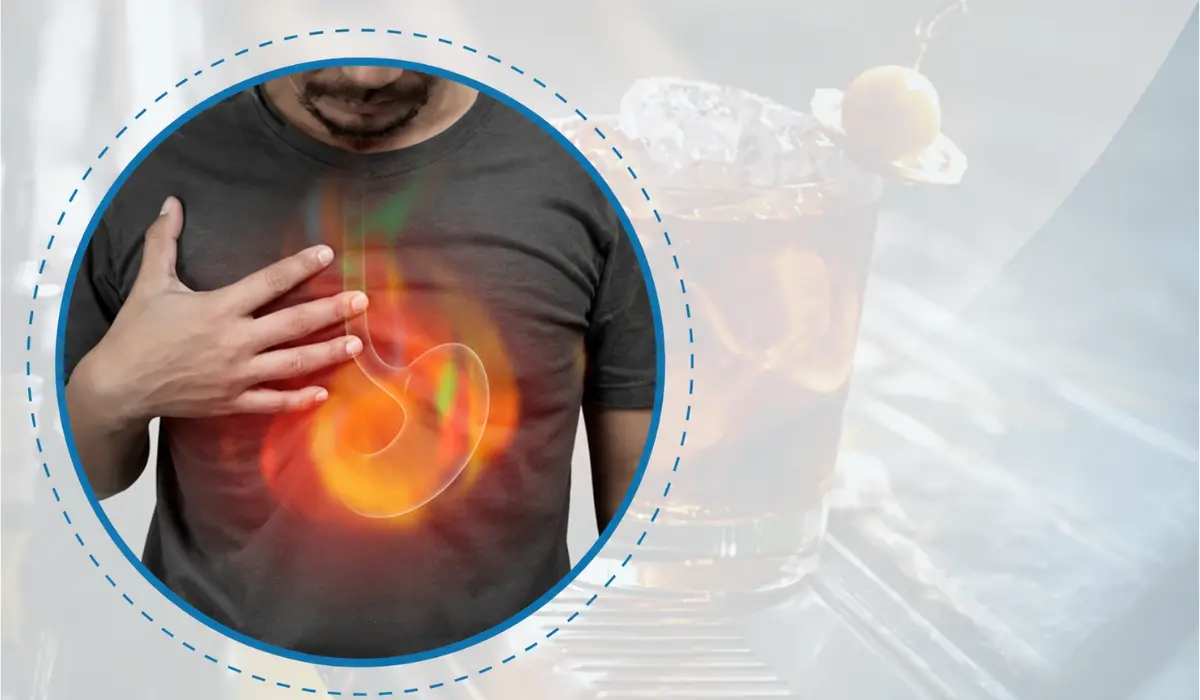
Yes, alcohol can cause acid reflux or make existing reflux symptoms worse. Alcohol may relax the lower esophageal sphincter, the muscle that normally prevents stomach acid from moving back into the esophagus. When this muscle becomes less effective, acid can travel upward and cause burning discomfort in the chest or throat.
Acid reflux after drinking alcohol may happen occasionally after a few drinks or become a repeated problem with frequent alcohol consumption. Symptoms can vary depending on the type and amount of alcohol consumed, eating habits, body position, and individual sensitivity.
How Does Alcohol Trigger Acid Reflux?
Alcohol can affect the digestive system in several ways that increase the likelihood of reflux. It may increase stomach acid production, irritate the esophagus, and slow down digestion.
When stomach contents move upward into the esophagus, the sensitive lining can become irritated. This can create symptoms such as heartburn, a burning sensation behind the breastbone, sour taste in the mouth, throat irritation, or discomfort after meals.
Alcohol-related reflux is more likely when drinking is combined with large meals, fatty foods, spicy foods, smoking, or lying down shortly after eating.
Alcohol and the Lower Esophageal Sphincter
The lower esophageal sphincter acts as a barrier between the stomach and esophagus. Normally, it opens when food enters the stomach and closes afterward to prevent acid from flowing backward.
Alcohol can weaken the function of this muscle, making it easier for stomach acid to reach the esophagus. This may lead to frequent episodes of heartburn or worsening symptoms in people who already have gastroesophageal reflux disease (GERD).
Different alcoholic beverages may affect people differently. Some individuals notice symptoms after beer, wine, or spirits, while others may only experience reflux after consuming larger amounts.
Can Alcohol Irritate The Stomach?
Alcohol can irritate the stomach lining and contribute to inflammation. This irritation may increase discomfort and make digestive symptoms more noticeable.
Alcohol and gastritis are closely connected because repeated alcohol exposure can damage the protective lining of the stomach. Gastritis may cause upper abdominal pain, nausea, bloating, indigestion, and a burning sensation that can sometimes be confused with reflux-related discomfort.
Reducing alcohol intake may help decrease stomach irritation and improve digestive symptoms.
Common Symptoms Of Alcohol-Related Acid Reflux
Symptoms of acid reflux after drinking alcohol may include:
- Burning sensation in the chest (heartburn)
- Acidic or sour taste in the mouth
- Regurgitation of food or liquid
- Burping or bloating
- Throat irritation or hoarseness
- Difficulty sleeping due to nighttime reflux
- Feeling of discomfort after meals
Some people may experience symptoms within minutes of drinking, while others notice them several hours later, especially after lying down.
Which Alcoholic Drinks Can Make Acid Reflux Worse?
Any alcoholic beverage may trigger acid reflux in some people, but certain drinks are more commonly associated with symptoms.
Beer may increase stomach pressure because of carbonation, which can encourage acid movement into the esophagus. Wine may trigger reflux symptoms in some individuals, especially when consumed with meals. Spirits with higher alcohol content may also irritate the digestive tract.
Individual reactions vary, so identifying personal triggers can help manage symptoms.
Can Heavy Drinking Cause Long-Term Reflux Problems?
Frequent or heavy alcohol consumption may increase the risk of ongoing digestive problems. Repeated irritation of the esophagus can contribute to chronic reflux symptoms and inflammation.
Long-term acid reflux may damage the esophageal lining and lead to complications if left untreated. People who experience frequent heartburn, swallowing difficulties, unexplained weight loss, vomiting, or persistent chest discomfort should seek medical evaluation.
Reducing alcohol intake, improving eating habits, and making lifestyle adjustments can help lower reflux symptoms.
How To Reduce Acid Reflux After Drinking Alcohol?
Several lifestyle changes may help reduce alcohol-related acid reflux:
- Drink less alcohol or avoid it if it consistently triggers symptoms
- Avoid lying down for at least a few hours after drinking or eating
- Eat smaller meals instead of large portions
- Limit spicy, fatty, and acidic foods when drinking
- Stay hydrated with water
- Avoid smoking, which can worsen reflux
- Maintain a healthy weight to reduce pressure on the stomach
If reflux continues despite these changes, a healthcare professional can help identify the cause and recommend appropriate treatment.
When Should You See A Doctor?
Occasional acid reflux after drinking may improve with lifestyle changes. However, medical advice is important if symptoms occur frequently or become severe.
Seek medical evaluation for:
- Heartburn occurring several times a week
- Difficulty or pain while swallowing
- Chest pain that is severe or unexplained
- Vomiting blood
- Black stools
- Unintentional weight loss
- Persistent nausea or vomiting
Chest discomfort should not always be assumed to be acid reflux because heart-related conditions can sometimes feel similar.
Frequently Asked Questions
1. Can alcohol immediately cause acid reflux?
Yes, alcohol can trigger acid reflux shortly after drinking by relaxing the lower esophageal sphincter and allowing stomach acid to move upward into the esophagus.
2. Why do I get heartburn after drinking alcohol?
Alcohol may increase stomach acid, irritate the digestive system, and weaken the muscle that prevents acid from flowing backward, leading to heartburn symptoms.
3. Which alcohol is least likely to cause acid reflux?
No alcoholic drink is guaranteed to prevent reflux. Some people tolerate certain drinks better, but reducing alcohol intake is usually the most effective approach.
4. Can quitting alcohol improve acid reflux?
Yes, reducing or stopping alcohol may improve acid reflux symptoms by decreasing stomach irritation and preventing alcohol-related relaxation of the esophageal sphincter.
5. Is acid reflux from alcohol dangerous?
Occasional reflux may not be serious, but frequent alcohol-related acid reflux can irritate the esophagus and may require medical evaluation if symptoms persist.
References
1. National Institute on Alcohol Abuse and Alcoholism (NIAAA)
Alcohol’s Effects on the Digestive System
https://www.niaaa.nih.gov/alcohols-effects-health/alcohols-effects-body
2. Mayo Clinic
Gastroesophageal Reflux Disease (GERD)
https://www.mayoclinic.org/diseases-conditions/gerd/symptoms-causes/syc-20361940
3. Cleveland Clinic
Acid Reflux (GERD): Causes, Symptoms, and Treatment
https://my.clevelandclinic.org/health/diseases/17019-acid-reflux-gerd

