
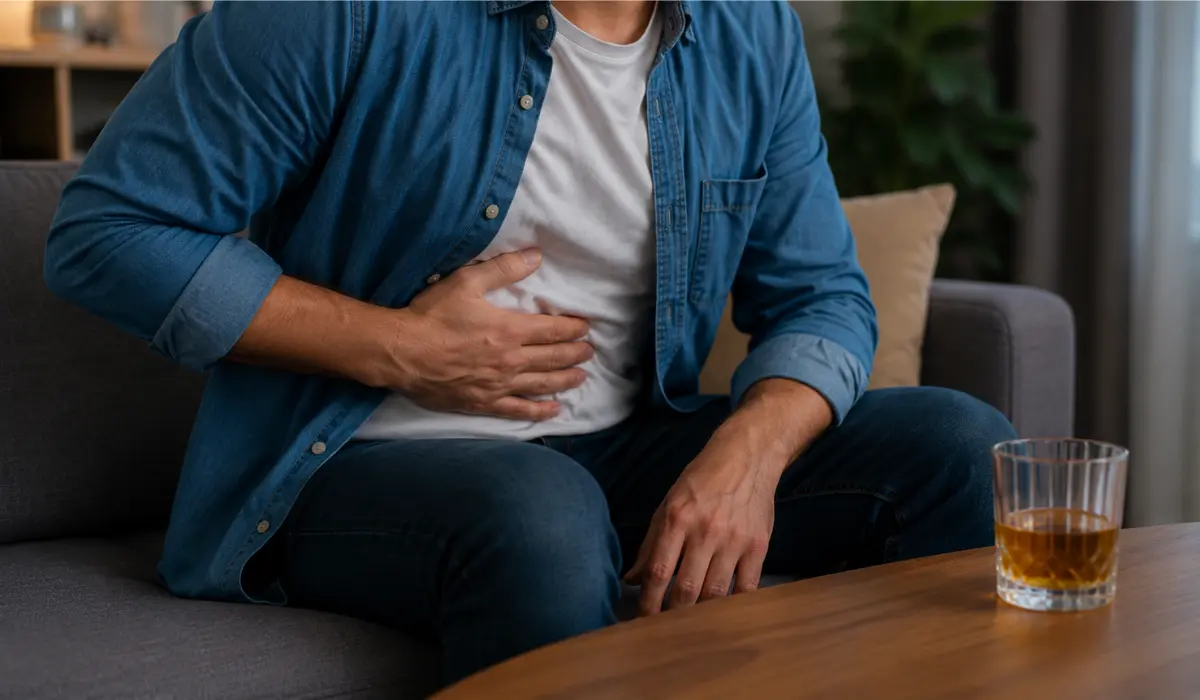
A burning sensation in the stomach after drinking alcohol often develops because alcohol irritates the protective lining of the digestive system. It may also increase stomach acid, worsen acid reflux, or aggravate an existing condition such as gastritis or a stomach ulcer.
The discomfort may feel like warmth, gnawing, aching, or burning in the upper abdomen. Some people notice it while drinking, while others develop symptoms several hours later or the following morning.
Why Does Alcohol Burn My Stomach?
Alcohol contains ethanol, a substance that can directly irritate the stomach lining. Your stomach normally has a protective mucus layer that prevents digestive acid from damaging its tissues. Alcohol can weaken this barrier, leaving the lining more sensitive to acid.
Drinking may also increase acid production. The combination of extra acid and reduced protection can produce burning, nausea, bloating, indigestion, or upper abdominal pain. Binge drinking may be especially likely to trigger acid-related digestive symptoms.
The severity of the burning may depend on:
- How much alcohol you consumed
- How quickly you drank
- Whether you drank without eating
- The type of alcoholic beverage
- Your existing digestive health
- Any medications you take
Alcohol-Related Gastritis
Gastritis happens when the stomach lining becomes irritated, inflamed, or damaged due to various causes. Alcohol can cause gastritis after heavy drinking or worsen long-term inflammation when consumed frequently, causing symptoms like stomach burning, nausea, discomfort, indigestion, and digestive irritation.
Common gastritis symptoms include:
- Burning or gnawing pain in the upper stomach
- Indigestion
- Nausea or vomiting
- Bloating
- Burping
- Reduced appetite
- Feeling full soon after eating
Alcohol may chemically erode the stomach lining and cause erosive gastritis. Symptoms can range from mild discomfort to serious digestive bleeding.
Acid Reflux And Heartburn
The burning may not always come directly from the stomach. Alcohol can contribute to acid reflux, which occurs when stomach contents move upward into the oesophagus.
Reflux usually causes burning behind the breastbone, but some people also feel discomfort near the upper stomach. It may come with a sour taste, frequent burping, throat irritation, or symptoms that worsen when lying down.
Carbonated alcoholic drinks, citrus-based cocktails, high-fat mixers, and drinking shortly before bed may make reflux symptoms more noticeable.
Drinking Alcohol On An Empty Stomach
Drinking without eating may cause alcohol to reach the stomach lining more directly. Alcohol also enters the bloodstream faster when the stomach is empty, which can increase intoxication and digestive irritation.
Eating does not make drinking risk-free, but having a balanced meal before consuming alcohol may slow its absorption. Avoid using food as a reason to continue drinking when burning or pain has already started.
Could The Burning Be A Stomach Ulcer?
A stomach ulcer is an open sore in the protective stomach lining. Alcohol does not cause every ulcer, but it can irritate and erode the stomach’s mucus layer and increase acid production. This may worsen the pain from an existing ulcer.
Ulcer pain commonly feels like burning in the upper abdomen. It may become worse at night, between meals, or after drinking. Other symptoms can include nausea, bloating, heartburn, and reduced appetite.
Many ulcers are linked to Helicobacter pylori infection or regular use of nonsteroidal anti-inflammatory drugs, also called NSAIDs. Common examples include aspirin, ibuprofen, and naproxen.
Why Certain Alcoholic Drinks Burn More?
Some drinks may feel harsher than others because of their alcohol concentration and additional ingredients.
Spirits such as vodka, rum, whiskey, and tequila contain a higher percentage of alcohol than most beers or wines. Drinking them straight may cause more immediate irritation.
Cocktails may also contain acidic fruit juice, caffeine, carbonation, sugar, or spicy ingredients. These additions can worsen indigestion or reflux in sensitive people. However, switching drinks may not solve the problem if alcohol itself is causing the irritation.
How To Calm Stomach Burning After Drinking?
Stop drinking alcohol as soon as burning begins. Continuing to drink may increase irritation and delay recovery.
Sip water slowly to address dehydration, but avoid drinking a large amount at once if you feel nauseated. Choose gentle foods such as oatmeal, bananas, plain rice, toast, applesauce, or broth if you can eat comfortably.
For the next day or two, avoid common stomach irritants, including:
- More alcohol
- Spicy foods
- Citrus fruits
- Tomato-based foods
- Coffee and energy drinks
- Carbonated beverages
- Fried or fatty meals
- Smoking
Some people use antacids for occasional heartburn or indigestion. However, antacids can affect how other medicines work, and alcohol may continue to irritate the stomach even when symptoms temporarily improve. Ask a pharmacist or healthcare professional which option is suitable for you.
Avoid taking ibuprofen, aspirin, or naproxen for stomach pain unless a healthcare professional has advised it. These medicines can further irritate the stomach lining.
When To See A Doctor?
Arrange a medical evaluation if the burning happens repeatedly, lasts more than a few days, wakes you at night, or occurs after small amounts of alcohol. You may need testing for gastritis, reflux, an ulcer, H. pylori infection, or another digestive condition.
Seek urgent medical care for:
- Vomiting blood or material resembling coffee grounds
- Black, sticky, or tar-like stools
- Severe or worsening abdominal pain
- Fainting, confusion, or severe weakness
- Persistent vomiting
- Difficulty breathing
- Chest pain
- A hard or swollen abdomen
Blood in vomit or black stools can indicate gastrointestinal bleeding, which may become life-threatening without treatment.
How To Prevent Alcohol-Related Stomach Burning?
The most reliable way to prevent alcohol from irritating your stomach is to avoid it. When symptoms repeatedly return after drinking, your body may be signalling that alcohol is aggravating an underlying digestive problem.
Reducing how often and how much you drink may lower irritation, but it does not guarantee that symptoms will stop. Avoid mixing alcohol with NSAID painkillers, and speak with a doctor if you depend on alcohol or experience shaking, sweating, anxiety, nausea, or other withdrawal symptoms when you try to stop.
Conclusion
So, why does alcohol burn your stomach? Alcohol can weaken the stomach’s protective barrier, increase acid production, trigger reflux, and aggravate gastritis or ulcers. Mild discomfort may improve after stopping alcohol and avoiding irritating foods.
Repeated, severe, or worsening burning should not be ignored. A healthcare professional can identify the underlying cause and recommend appropriate treatment before the irritation causes further damage.
Frequently Asked Questions
1. Why does my stomach burn immediately after drinking alcohol?
Immediate burning may occur because concentrated alcohol directly irritates the stomach lining. It can feel stronger when you drink spirits quickly or consume alcohol without food.
2. How long does alcohol-related stomach burning last?
Mild irritation may improve within several hours or one to two days after stopping alcohol. Persistent pain may indicate gastritis, reflux, an ulcer, or another condition that needs medical assessment.
3. What can I drink to soothe my stomach after alcohol?
Sip water slowly. Some people tolerate non-caffeinated herbal tea or clear broth, but avoid citrus juice, coffee, energy drinks, soda, and more alcohol while symptoms continue.
4. Does drinking milk stop alcohol from burning the stomach?
Milk may briefly coat the stomach and reduce discomfort, but it does not repair inflammation or prevent alcohol-related damage. High-fat milk may also worsen reflux in some people.
5. Can alcohol permanently damage the stomach lining?
Repeated or heavy alcohol use can cause ongoing inflammation or erosion of the stomach lining. Stopping alcohol and receiving appropriate treatment may allow healing, depending on the severity and underlying cause.
References
1. National Institute on Alcohol Abuse and Alcoholism (NIAAA)
Hangovers: Gastrointestinal Irritation
https://www.niaaa.nih.gov/publications/brochures-and-fact-sheets/hangovers
2. National Institute of Diabetes and Digestive and Kidney Diseases (NIDDK)
Symptoms and Causes of Gastritis and Gastropathy
https://www.niddk.nih.gov/health-information/digestive-diseases/gastritis-gastropathy/symptoms-causes
3. Mayo Clinic
Gastritis: Symptoms and Causes
https://www.mayoclinic.org/diseases-conditions/gastritis/symptoms-causes/syc-20355807

